
Israel
Culture & Society
The Program treats Israel as a serious, often fraught, and necessary object of inquiry: the Land before the State in reality and in Diasporic imagination, and the State that came into being on it; the religious and secular cultures that have grown there; the politics, the conflicts, the art, the press, the public disputes. We bring Israeli scholars, artists, and journalists to campus; we make room for the difficult conversations the present moment demands. For the Hebrew language program, see Hebrew.
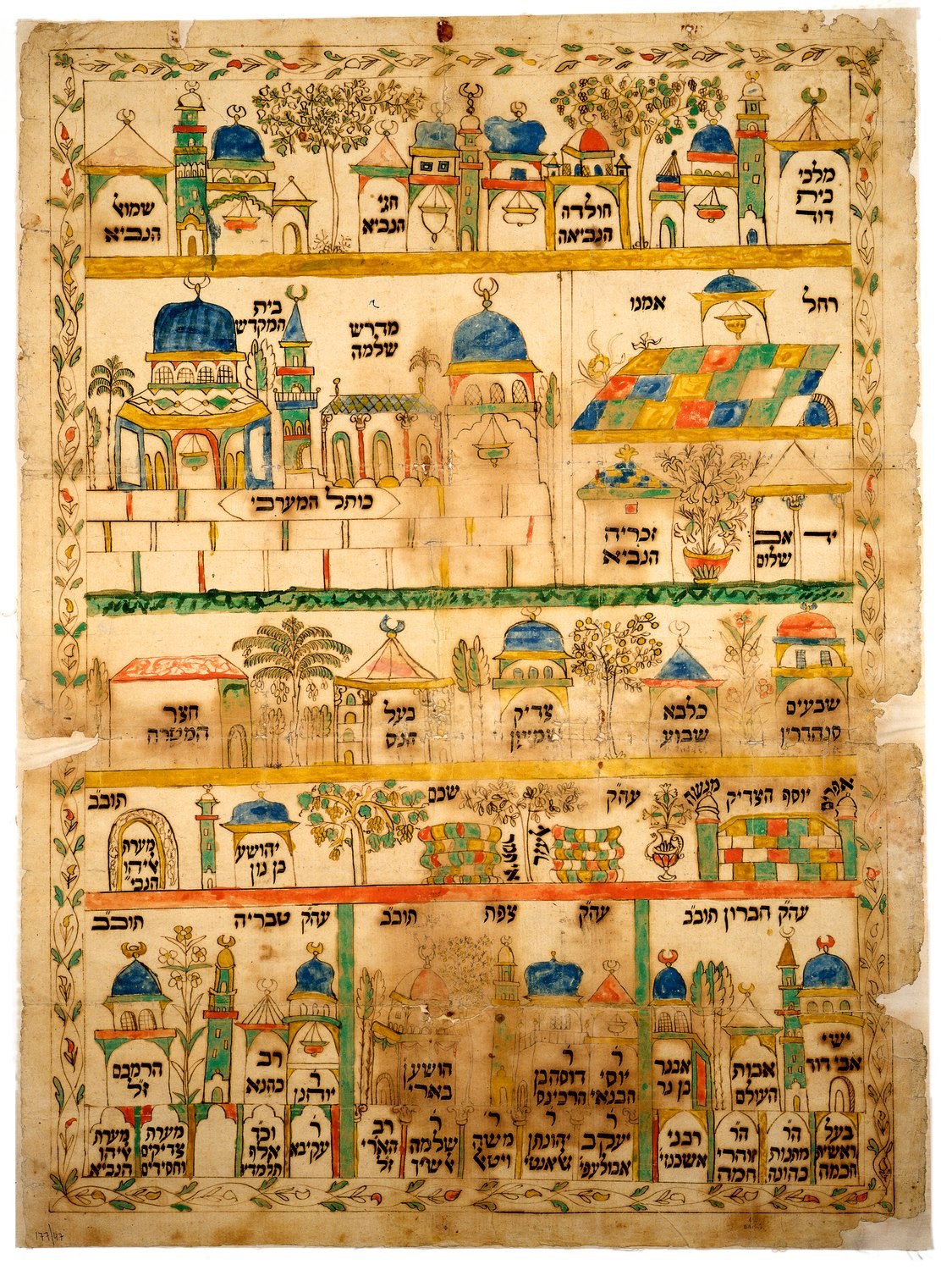
Courses
History, politics, religion, society. The dialogical seminar at the top of the sequence is team-taught and reserved for advanced students prepared for hard, structured disagreement.
Additionally, the following courses deal with questions of attitudes toward Israel:
Israeli Voices at the Lectern
A selection of Israeli scholars, artists, and journalists who have come to Vassar through the Sitomer Lecture, the Fishman Family Visiting Scholar program, and Program-sponsored events. Both Sephardi/Mizrahi and Ashkenazi traditions; religious and secular; left, right, and center.
A leading historian of Jewish-Christian relations and the social history of the Roman Ghetto, drawing on his 2024 book Feeding the Eternal City: Jewish and Christian Butchers in the Roman Ghetto (Harvard).
An Israeli vocal artist who works the alphabet of ancient Hebrew and Aramaic as a living, embodied tradition. Forbes 50 Most Influential Women in Israel (2015). Co-sponsored by the Consulate General of Israel in New York. Her viral videos — The Aleph-Bet Song and 22 Letters — have been viewed millions of times.
A leading scholar of early modern Jewish mysticism, on the visual cosmologies of Kabbalah and their afterlives in Christian and esoteric traditions.
Editor-in-chief of Maggid Books and a teacher at the Pardes Institute, on the women of the Talmud as literary characters and ethical figures.
A scholar of Jewish women’s liturgy and a former member of the Knesset; her anthology A Jewish Woman’s Prayer Book is widely acclaimed and treasured.
Travel
Students with intermediate or advanced Hebrew apply directly to Tel Aviv University, the Hebrew University of Jerusalem, the University of Haifa, and Ben-Gurion University of the Negev for a junior-year semester or year, with course credit transferring toward the major or correlate. The Director and the Hebrew Coordinator advise on placement and on coursework in Israeli history, literature, sociology, and political science.
A Note on Pluralism
The Program does not, and may not, advocate for a political position regarding Israel or its conflicts. Our faculty hold a range of views, individually and openly. What we do — and do strenuously — is teach the languages, sources, histories, and disputes without which serious thinking about Israel is impossible. We bring scholars, artists, and journalists across the spectrum of Israeli and diasporic Jewish life. We make room for the hard conversations students are entitled to have. The Bund and Herzl, Buber and Magnes, religious anti-Zionism and labor Zionism, secular diasporism and contemporary settler Zionism — all are part of the modern Jewish conversation, and all belong in the classroom.