
Yiddish Lives
Yiddish — the everyday spoken language of Ashkenazi Jews for the better part of a thousand years — gave rise to a literature, a popular culture, a music, and a politics whose vitality has long outlived the fantasy of its disappearance.
The Program treats Yiddish as living material: a language with a grammar to be learned, a literature to be read, songs to be sung, and an extraordinary archive of modernist experiment to be discovered. Beginning, intermediate, and advanced Yiddish are offered through the Program on a self-instructional basis with regular tutorial support. Students with a serious commitment can build genuine reading proficiency in two to three semesters and use Yiddish materials in senior research.
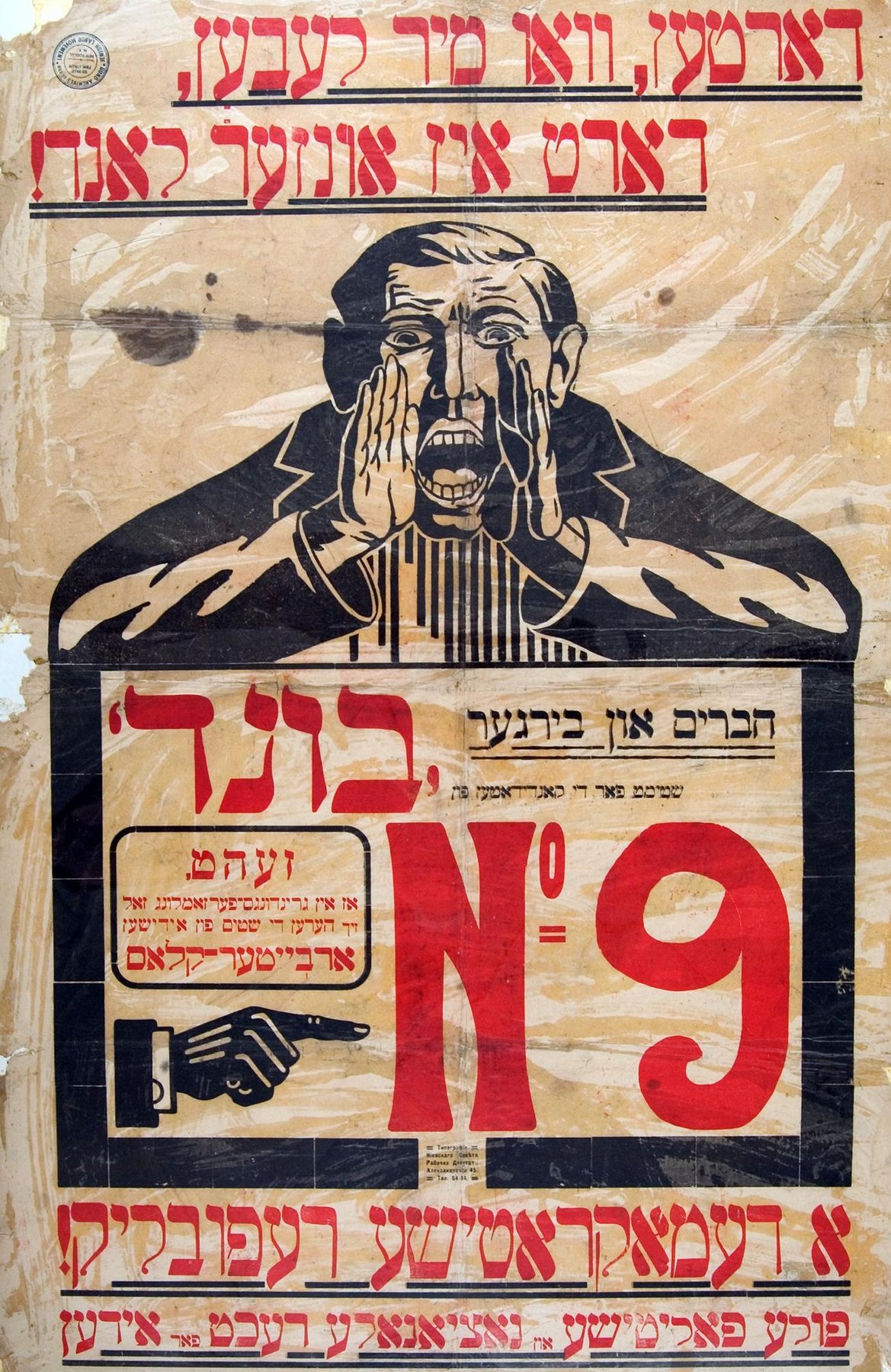
What we offer
A brief history of Yiddish at Vassar
A riotous, deliberately border-crossing reimagining of klezmer for the late nineties. An early signal that the Program would treat Yiddish musical and literary culture as living, contested, and current.
A three-day faculty seminar and a public lecture on the politics of Yiddish modernism — one of the earliest documented Fishman seminars and a benchmark for how Yiddish would be taken up by the Program.
The violinist Alicia Svigals (founding member of The Klezmatics) and pianist Marilyn Lerner performed a concert of Yiddish art-song and klezmer at Vassar — sponsored solely by Jewish Studies, opening the Program's twentieth-anniversary year.
With the appointment of Ágnes Vetö as Hebrew Language Coordinator, the Program also formalized self-instructional Yiddish with regular tutorial support, expanding access for students who want to read Sholem Aleichem, Bashevis Singer, or Kadya Molodowsky in the original.
Resources
For students. Students wishing to enroll in self-instructional Yiddish should write Professor Vetö in the term before they intend to begin. Placement, materials, and the cadence of weekly tutorial meetings are arranged individually — agveto@vassar.edu.
External partners. Yiddish Book Center · YIVO Institute for Jewish Research · Yiddish Farm · In geveb: A Journal of Yiddish Studies.